Social Europe

politics, economy and employment & labour

  • Publications
    • Books
    • Dossiers
    • Occasional Papers
    • Research Essays
    • Brexit Paper Series
  • Audiovisual
    • Audio Podcast
    • Social Europe Talk
    • Video Podcasts
  • Membership
  • Newsletter
  • Advertisements

Poland’s abortion protests—democratic standards at stake

by Maria Skóra on 30th October 2020

The passion behind the demonstrations signifies a battle for basic democratic standards in a world of creeping authoritarian temptations.

democratic standards, PiS
Maria Skóra

On October 22nd, the Constitutional Court in Poland made an unprecedented decision, declaring abortion due to foetal defects unconstitutional. Because around 90 per cent of all legal abortions in the country are performed on this criterion, upon entering into force this ruling will in practice drastically limit access to safe termination of pregnancy. It stands in opposition to medical science and to the will of the majority of the population, which—according to the polls—supports the existing abortion regime, already one of the strictest in Europe. 

This battle started as early as 2016, with ‘pro-life’ associations lobbying the parliament for an amendment to the law. They failed then but the change has now effectively been introduced by the Constitutional Court. The new status quo is not only controversial on its merits but also because the court’s judicial neutrality, vis-à-visthe governing Law and Justice Party (PiS), has long been questioned. 

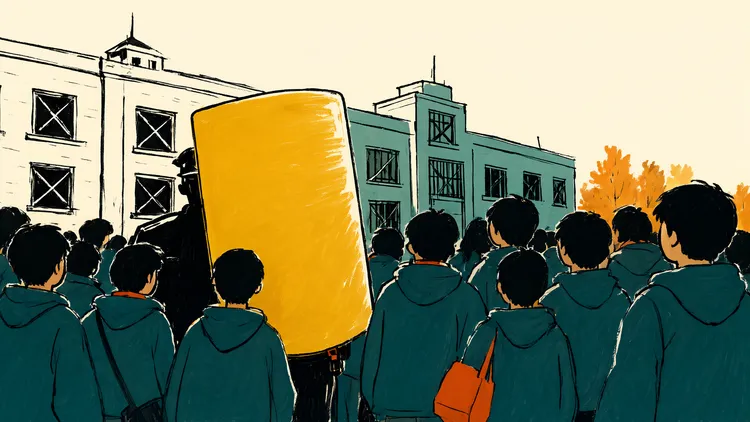
As a result, massive protests broke out, bringing thousands on to the streets, in Poland and among the diaspora around the world. Left and liberal female MPs occupied the podium in parliament. The protesters disrupted services of the Catholic Church, in protest at its political influence. Far-right paramilitary groups trying to set up a ‘national guard’ to protect churches were outnumbered by protesters and needed police protection themselves. 

The unrest continues, with more rallies planned home and abroad, including strikes, demonstrations and high activity on ‘social media’. Step by step, the demands are turning from securing access to abortion to the resignation of the government.


Our job is keeping you informed


Subscribe to our free newsletter and get the latest Social Europe content delivered straight to your inbox.


Thank you!

Please check your inbox and click on the link in the confirmation email to complete your newsletter subscription.


Accumulating anger

The public outcry in reaction to the ruling indicates there is more to this story than a fight for reproductive rights. In fact, this huge outbreak of anger has been accumulating for a while.

The PiS has been in power for five years now. From the outset, these have been turbulent times, marked by diverse protests—by doctors, teachers, farmers, miners and parents of disabled children. The pandemic has only aggravated the public mood, adding to the frustration of the most affected groups, such as micro- and small entrepreneurs, as well as coronavirus-deniers, a movement also germinating in Poland. 

Nevertheless, it’s the ideological war which seems to have agitated the society and petrified the political polarisation. The presidential election during the summer was won by Andrzej Duda, candidate of the United Right, by the skin of his teeth. The PiS retains a majority in the Sejm, the lower chamber, thanks only to its two junior coalition partners, while the Senat was lost to the opposition after the parliamentary elections in October 2019. Local governments and cities remain independent and very often in opposition to the central government.

Defamation campaign

The leader of the PiS, Jarosław Kaczynski, thus desperately need to cement the populist party’s domination. Meanwhile, one of the junior coalition partners—the leader of which holds the Ministry of Justice and the Office of the Public Prosecutor in his hand—has been testing how far it can go in building an electoral base with a radical-right agenda. 

It was in this context that over the summer the LGBT community in Poland became the target of a defamation campaign, which sadly mobilised many and mainstreamed homophobic narratives. It seems the PiS wanted to deliver a pointed response, to prove its ideological ‘purity’—and completely overdid it, putting its own government at existential risk. In so doing, it again tested the boundaries of what remains a young Polish democracy.


Help our mission to drive progressive policy debates


Social Europe is an independent publisher and we believe in freely available content. For this model to be sustainable we depend on the solidarity of our loyal readers - we depend on you. Please support our work by becoming a Social Europe member for less than 5 Euro per month. Thank you very much for your support!

Become a Social Europe Member

The government led by the PiS had already made public media an instrument of political campaigning and bent the judiciary to its political will, and now it compromises basic civil rights. The abortion ban was only the straw that broke the camel’s back. 

The latest protests have engaged men and women, of all ages, in big cities and smaller towns. They have to be seen in a broader context of defending democratic standards against an authoritarian mindset that wishes to strip individuals of their civil liberties, one by one, in pursue of absolute power.

Dramatic scenes

Nor is Poland the only example of citizen resistance. Hungarians and Bulgarians have also taken to the streets, in defence of academic freedom and against widespread corruption respectively. The most dramatic scenes are of course to be seen in Belarus (outside the European Union), where massive protests against the 26-year rule of Alexander Lukashenka have persisted since a highly contested presidential election in August. 

There is a lot of upheaval in Europe these days, seeking to save democratic institutions while proving the desire for democracy in citizens’ hearts and minds. Yet, these struggles do not seem to resonate much beyond national bubbles and public opinion in Europe sees them rather as country-specific—hence not as issues which might be tackled within the EU framework. 

The EU’s ineffectual clash with Poland and Hungary over ‘article 7’—the treaty clause allowing rights enjoyed by a member state to be suspended, by unanimity, for ‘serious and persistent breach’ of European values—has proved there are not yet the tools and procedures in place to safeguard democratic standards in Europe. Nevertheless, we have to start looking at local democratic deficits as our common cause, beyond the east-west divide and without distancing the European core from its peripheries. 

Democracy is a process and it comes in different shapes and forms. But without a common safeguarding mechanism and agreement on its basic values, European integration not only will not succeed—it will be permanently threatened by local outbursts of illiberal, authoritarian desires.

Maria Skóra

Maria Skóra is head of the international relations programme at Das Progressive Zentrum. She is also actively involved in the Progressive Governance (#PGS) event series. She holds a masters in sociology and a PhD in economics. In 2019 she has been a visiting fellow at the German Marshall Fund of the United States and AISGS, John Hopkins University in Washington DC. She is an alumna of the Young Leaders Program of the Aspen Institute Central Europe in Prague.

Home ・ Politics ・ Poland’s abortion protests—democratic standards at stake

Most Popular Posts

electricity,public good,Timmermans,ETS,emissions-trading system An unorthodox solution for Europe’s electricity crisis Michael Davies-Venn
Sondierungspapier,traffic-light coalition,Ampelkoalition,debt break,Schuldenbremse Germany’s traffic-light coalition: green light or stuck on amber? Peter Bofinger
China,inequality,inequalities,Xi Jinping Can Xi Jinping defeat three stubborn modern inequalities? Branko Milanovic
climate transition,green transition A new global economic consensus Mariana Mazzucato
Pandora Papers,trust The Pandora Papers and the threat to democracy Katharina Pistor

Most Recent Posts

cows,cattle,livestock,emissions,food,agriculture,GHG,dairy Getting to zero—what’s the beef? George Tyler
Benchmarking Working Europe,inequality Structural solutions for structural inequalities—a trade union perspective Luca Visentini, Nicola Countouris and Philippe Pochet
care,human,relationships,carers Reimagining care Anne-Marie Slaughter
Magdalena Andersson,first female prime minister Andersson’s agenda Lisa Pelling
budget, Multiannual Financial Framework,MFF,own resources Raising the resources to open the European sluice-gates Margit Schratzenstaller-Altzinger

Other Social Europe Publications

The transatlantic relationship
Women and the coronavirus crisis
RE No. 12: Why No Economic Democracy in Sweden?
US election 2020
Corporate taxation in a globalised era
The transformation of work
The coronavirus crisis and the welfare state
Whither Social Rights in (Post-)Brexit Europe?
Year 30: Germany’s Second Chance
Artificial intelligence

Hans Böckler Stiftung Advertisement

WSI policy brief: the formula for a social Europe

The strengthening of the social dimension of the EU is back on the agenda of European politics. The European Pillar of Social Rights, the revision of the Posted Workers Directive and the initiative for a European minimum wage are interpreted by some as a turning point. However, the road to a more social Europe is still very long. Against that background, this paper formulates a social Europe thus: social minimum standards plus a reconfiguration of the internal market and economic and monetary union in a manner compatible with the pillars of the European social model.


FREE DOWNLOAD

ETUI advertisement

Inequality: new dimensions to an old problem

Despite enjoying the status of the most equal region in the world, Europe remains, overall, a land of rising inequalities, with new dimensions and forms of inequality constantly emerging and Covid-19 as a most recent catalyst for many. While it is not at all obvious how these growing societal rifts will be addressed, let alone remedied, in the post-pandemic world, it is clear they should be dealt with as a matter of urgency since the longer we take to reverse inequality the harder it will be to reconstruct sustainable and resilient European economies and societies.

This issue of Benchmarking Working Europe takes stock of the various inequalities in Europe, emphasising how the pandemic has generated new dimensions of inequality and aggravated existing ones, as well as pointing out how inequalities are an obstruction to resilience and sustainability and actively hinder a post-pandemic vision for a prosperous and equitable Europe. It also seeks to identify a range of policy actions that could assist with tackling inequalities.


AVAILABLE HERE

Eurofound advertisement

Living, working and Covid-19 (update April 2021): mental health and trust decline across EU as pandemic enters another year

The third round of Eurofound's Living, working and Covid-19 e-survey, fielded in February and March 2021, sheds light on the social and economic situation of people across Europe following nearly a full year of living with restrictions. The report analyses the main findings and tracks developments and trends across the 27 EU member states since the survey was first launched in April 2020. It pinpoints issues that have surfaced over the course of the pandemic, such as increased job insecurity due to the threat of job loss, decline in mental wellbeing, erosion of recent gains in gender equality, fall in trust vis-à-vis institutions, deterioration of work–life balance and growth of vaccine hesitancy. The results of the survey highlight the need for a holistic approach to support all the groups hit hard by the crisis, to prevent them from falling further behind.


CLICK FOR MORE INFO

Foundation for European Progressive Studies Advertisement

Discover the new issue of the Progressive Post!

Social rights for platform workers, fiscal-rules reform and EU enlargement, as well as the challenges and opportunities for social democrats in the post-pandemic context, are the main topics of the latest Progressive Post magazine.

After more than a year of the pandemic, we are in a crucial political moment: policy decisions made now will drive reforms and sustainable growth in the years to come. For progressives to take ownership of these topics, this issue of the Progressive Post analyses some of these opportunities.


DOWNLOAD HERE

About Social Europe

Our Mission

Article Submission

Legal Disclosure

Privacy Policy

Copyright

Social Europe ISSN 2628-7641

Find Social Europe Content

Search Social Europe

Project Archive

Politics Archive

Economy Archive

Society Archive

Ecology Archive

.EU Web Awards